
Divorce Records Search
Divorce Information, Assets, Court Records & More!
What customers are saying
"I called to cancel my account and the young man that helped me was very nice and helpful"
"The agent was wonderful. She explained everything to me in detail. Thank you!"
"Tom was able to look up my account and resolve my issue with great professionalism! Thank yoi"
"They were very helpful. Answered all my questions and solved my issue."
"Excellent customer service, I had my concerns addressed immediately without any problems."
"Great help, Patient and honest. My customer care was clear about everything."
"records were very clear and easy to search."
"The service was excellent handled everything I needed to be handled perfect i would recommend it"
"A top class act in customer service."
"I had been researching for a lost information on a vehicle for over a month. Ran into brick walls everywhere. Record Finder did the job for me. Thank you so much."
"The rep was very helpful and the information was great. Thanks"
"Exceptional customer service and outstanding site! I highly recommend!"
"They helped me find the information I needed."
"Excellent service with great ease of use. Very courteous and professional customer service as well."
"The lady who help me was very professional and helpful. She was able to find a solution to my issue I really appreciate her time."
"Customer service went the extra mile for me to correct a problem on my account and I am so very grateful."
"I worked with a wonderful woman named Rhea who was patient and understanding of my situation. If I am ever in need of your services again, I will not hesitate to use them."
"I am confident that Records Finder will be able to provide contact info on a missing person I wish to contact. I have used Records Finder several times in the past and usually with success. I recommend their services."
"I used Record Finder to find info on me. I really understand how important good info can be."
"The process was simple and straight forward. Accurate base on history and informative. Customer service representative was courteous and friendly."
"I had no problem with Record Finder and they helped me find the person I was looking for."
"BAM! Was able to find the owner of a vehicle!"
"Everything worked great! It was easy to use and operate! My on line chat person was awesome!"
"I was helped swiftly and accurately. The rep was courteous and respectful, and saw to my need immediately. Great Job!!"
"This is a very helpful site. I was able to access the site with ease and find the information I needed quickly and completely."

What Information is Available in Divorce Reports?

Divorce Records
Check if a person is divorced or if they have recently filed for divorce. Anything from Basic Contact Information to Age, Date, State of Filing information is extracted from thousands of Local, State or County databases just for you.

Marriage Records
Within seconds, you can track someone’s marital history and check if they are currently married & to whom. Gain access to millions of marriage records across the US. Our search reports will promptly deliver Marriage Dates, Spouse’s Age, Full Name & more.

Assets
Be informed of what assets a person owns and whether they have lost any. We help you uncover tangible or intangible Assets, Income, Investments, Real Estate, Vehicles, Boats or Aircraft. Use our lookup tool to estimate a person’s financial worth.

Bankruptcies
Has someone filed for bankruptcy under Chapter 7 or Chapter 13 of the Bankruptcy Code? We provide the best way to find out. If you look for private or business bankruptcy records,payment plans or dischargeddebts, our search button can help.

Judgments
Discover financial obligations set forth by the court as a result of divorce. Depending on the case, this could includevaluable information on the judgement types, names of parties involved, amounts, state of filing and much more.

Criminal Records
Criminal convictions on somebody’s record for any Felonies or Misdemeanors committed could affect some divorce proceedings. Find out if a person has ever been changed with a crime, see their Incarceration History & Mugshots.
Searching Divorce Records Online
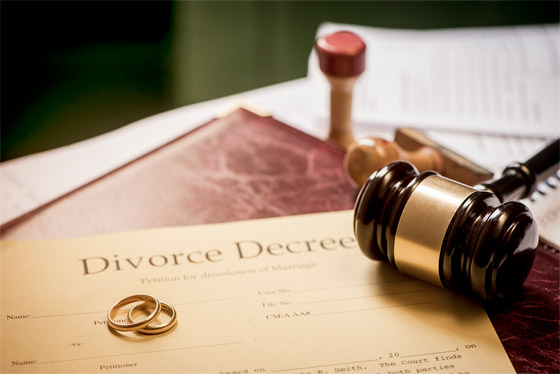
Divorce Statistics show that over 600,000 divorces occur every year in the US. Records of these divorces are official documents containing information about the dissolution of a marriage. They are maintained by government agencies such as local courts and state vital records offices and serve various purposes, such as legal, personal, and genealogical.
There are three main types of divorce records: Divorce Certificates, Divorce Decree, and Divorce Case Files. Divorce certificates confirm that a divorce has been finalized and are often required for legal name changes, remarriages, and other legal processes. Divorce decrees are the final judgments of the divorce, outlining the terms of dissolution, such as property division, child custody, and child support arrangements, serving as comprehensive records of the settlement. Divorce case files contain all the documentation related to the divorce proceedings, providing a detailed account of the entire process from filing to final judgment.
A divorce record may be searched for different reasons. Some requesters seek to access divorce records for legal proceedings or immigration purposes. Others may search divorce records for personal reasons, such as confirming the marital status of a potential partner, or for genealogical purposes to learn their family history and establish their lineages. Personal documentation reasons also remain some of the purposes behind many divorce record requests.
How to Search for Divorce Records
To search for divorce information, you need basic details about the divorce, such as the full names of the parties involved, the approximate date of filing or final judgment of the divorce, the location where the divorce was finalized (such as the city, county, and state), and the case number, if known.
In order to perform a search on reputable divorce records websites like RecordsFinder:
- Visit the RecordsFinder.com website
- Under the "Records" tab, click on "Divorce Records".
- Enter the full names of the parties involved, along with any additional details, such as the state or city where the divorce occurred.
- Click the "Search Now" button to initiate the search.
- Review the search results and select the relevant record, and if necessary, create an account or pay a fee to access the full details of the divorce record.
Note that there are important differences between using free and paid services when searching for divorce records. While free services may be a good starting point for preliminary searches, they only provide basic information, such as the names of the parties involved and the filing date. If you want to obtain detailed records and up-to-date information, consider using paid services, as they provide more reliable information.
Divorce Statistics
Sad Fact: 50% of marriages end in divorce
 Someone gets divorced every 13 seconds in America
 The average length of a first or second marriage before getting a divorce is 8 years
 2 Years - is how long a person thinks about divorce before moving forward with it
 Most divorced people wait on average 4 years before getting remarried
 18 Months - is the average time a person tries to work on their marriage before actually deciding to get one
 More than 35% speak to a lawyer before making the final decision to get divorced...
 ...and more than 53% talked about it with their mother, a sibling or a friend rather than their spouse
 More than 75% of couples try to fix their marriage before getting a divorce...
 ...and 47% do so for the sake of the kid’s
 45% of divorced couples remain friends...
 ...and 31% have absolutely no contact with their ex-spouse
The odds that you will get divorced increase significantly if you:
 Smoking
 One person does all the chores
 Have financial problems
 Have been married before
 You have poor communication
 Met in a bar
 There is abuse
 One or both people cheat
 All your friends are divorced
 One of you is a dancer, bartender or massage therapist
Divorce Records by States
- Alabama
- Alaska
- Arizona
- Arkansas
- California
- Colorado
- Connecticut
- Delaware
- Florida
- Georgia
- Hawaii
- Idaho
- Illinois
- Indiana
- Iowa
- Kansas
- Kentucky
- Louisiana
- Maine
- Maryland
- Massachusetts
- Michigan
- Minnesota
- Mississippi
- Missouri
- Montana
- Nebraska
- Nevada
- New Hampshire
- New Jersey
- New Mexico
- New York
- North Carolina
- North Dakota
- Ohio
- Oklahoma
- Oregon
- Pennsylvania
- Rhode Island
- South Carolina
- South Dakota
- Tennessee
- Texas
- Utah
- Vermont
- Virginia
- Washington
- West Virginia
- Wisconsin
- Wyoming
Top Reasons For Divorce
 One or both people cheated
- Money problems
- Constant bickering
- Unhappy
- Abuse
- Communication issues
- One partner changed or didn’t change enough
- No longer in love or attracted to each other
- Lives were moving in different directions
- One person had to do all the work
 77% of divorced individuals say their children were negatively affected by their divorce
 28% of children living with one divorced parent are living in poverty
 28% of children of divorced parents are not as close to their fathers, after the divorce
 Children of divorce are more likely to do poorly in school and drop out
 Children of divorce have more psychological and behavioral issues, and 25% of them detach from family
Challenges Accessing Divorce Records
Divorce records may not always be accessible due to a few reasons. For example, one or both parties involved in a divorce may request the sealing of the records to restrict access to sensitive personal information. If the court grants the sealing request of the parties, such a record may only be accessible upon getting a court order. Courts grant sealing requests to protect sensitive information, such as details about children, financial records, or cases involving domestic violence. Typically, when privacy and safety concerns outweigh the public's right to access the information, a sealing request will be granted. In some cases, sealing may also occur to prevent identity theft or harassment.
When searching for divorce records online, another major challenge is dealing with incomplete or outdated databases. Many divorce search websites claim to provide access to these records, but not all of them ensure their databases are regularly updated or comprehensive, leading to frustrating searches with missing or outdated information. RecordsFinder stands out as a reliable solution, offering users access to an extensive, frequently updated database to ensure the most accurate and up-to-date records available. Whether you need divorce records for legal, personal, or genealogical reasons, RecordsFinder provides a seamless and efficient search experience, saving you time and eliminating the hassle of sifting through unreliable sources.
Issues with mismatched or common names may also complicate a divorce record search process. In situations where an individual has a common name, such as John Smith, or the name was incorrectly spelled, it may be difficult to find the correct search result. To improve your search, ensure you use the full legal names, including middle names or initials, and provide as much additional information as possible, such as the location and date of the divorce.
 5% of divorced people still wear their wedding rings, and 24% have them but don’t wear them
 Divorce is costly for a woman. 30% of divorced women earn $25,000-$50,000, about a third what their ex-spouse earns
 During a recession, divorce rates drop - it’s cheaper just to stay together or separate long-term
Legal and Privacy Considerations
Typically, divorce records are open to the public unless sealed by the court. Therefore, in most cases, anyone may access basic information about a divorce, including the names of the parties involved, the date of the proceeding, and the final judgment. However, sensitive information such as financial settlements, child custody arrangements, or personally identifiable information may be redacted or sealed to protect the privacy of those involved.
Limitations and restrictions placed on divorce records vary per state. In some states, access is limited to authorized persons only, such as the parties involved in the divorce or their authorized representatives. However, if you have a court order instructing that you be afforded access to a court document, you may be able to access that specific court document. For instance, states such as Alaska, Arkansas, Hawaii, Idaho, and Oregon impose restrictions on who can view or obtain copies of divorce records. This is done to safeguard personal privacy and sensitive information, particularly when minors or issues of domestic violence are involved.
Beyond legal regulations, ethical implications play a crucial role in accessing divorce records. Requesters of divorce records are advised to use the information obtained responsibly even in states where divorce records are publicly available. Sharing or exploiting sensitive information contained in divorce records for blackmail, personal gain, or other unethical purposes is inappropriate and may lead to legal consequences. Even in cases where the records contain less traumatic information, it is important to respect the privacy of the persons involved in such cases by using any information obtained from the records responsibly.
Why Choose RecordsFinder.com?

Fast
Search over 2 billion records instantly. Easily find the information you are looking for with three easy steps- search, sign up, and view report.

Comprehensive
We have one of the most comprehensive data coverages in the industry including state, federal, county, municipal, and private data sources when available.

Affordable
With our unlimited search access, you can look up as many reports as you want! Others charge for every single search.

Reliable
Millions of users rely on us to deliver accurate and current data for their information needs.
Search Divorce Records on RecordsFinder.com
Recordsfinder.com is not a consumer reporting agency as defined by the Fair Credit Reporting Act (FCRA), and does not assemble or evaluate information for the purpose of supplying consumer reports.
You understand that by clicking "I Agree" you consent to our Terms of Service and Privacy Policy and agree not to use information provided by Recordsfinder.com for any purpose under the FCRA, including to make determinations regarding an individual's eligibility for personal credit, insurance, employment, tenant screening, or for any other purpose governed by the FCRA, and you agree to indemnify Recordsfinder.com from any 3rd party claims, complaints, or actions arising from your violation of the Terms.
This website contains information collected from public and private resources. Recordsfinder.com cannot confirm that information provided below is accurate or complete. Please use information provided by Recordsfinder.com responsibly.
You further authorize Recordsfinder.com to conduct a search to identify preliminary results of records related to the subject you entered. The first search we conduct is a people search to locate and identify the person whose name(s) match the search term(s) you entered. The people search does not search court, criminal, or official records. You understand and agree that full search reports will only be available after you register for an account or purchase a report.